

Radiant Heat Design + install
Elevated comfort. Proven expertise. Radiant Heating Installation.
Radiant Heating Designed for New Home Construction
For forty years, homeowners, architects, and builders have trusted Janes Radiant for responsive, professional hydronic heating installation in the region’s finest custom homes.

The Radiant Heating Install Partner You Can Rely On
What sets Janes Radiant apart is how we work. We arrive on schedule, communicate clearly, and treat your jobsite with the same care we’d expect on our own. Homeowners get a heating system designed around their needs, and contractors get a trade partner that makes their job easier.
Professional Hydronic Heating System installation
Radiant Heating Is Whole-Home Comfort
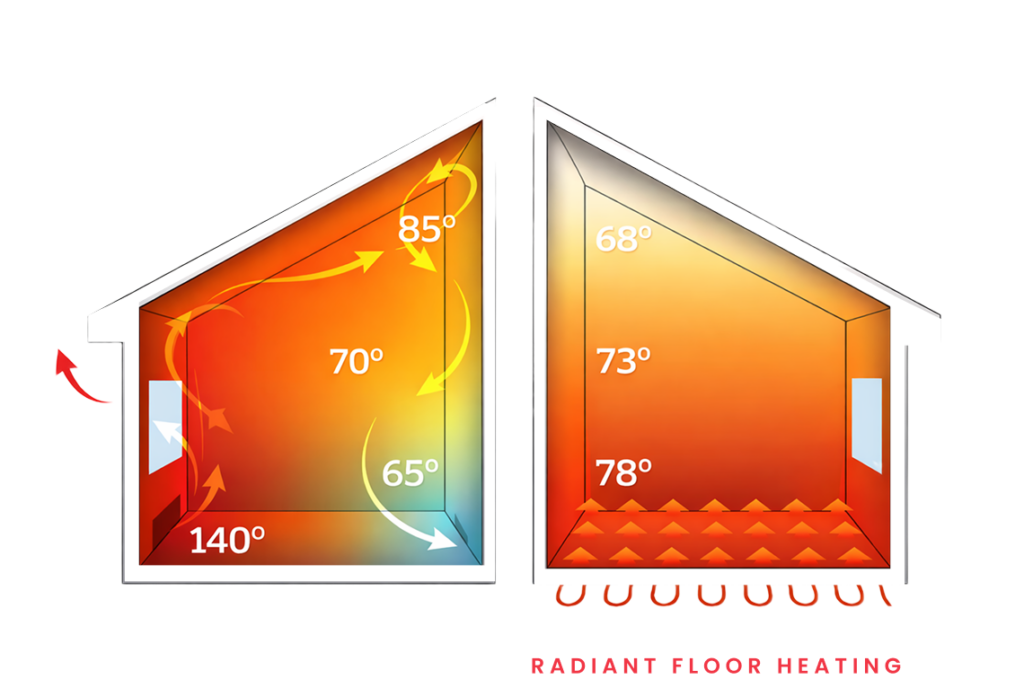
Heats Every Part of Your Home
Radiant floor heating provides exceptional comfort by warming the floor utilizing the thermal mass of the home. This retains heat more efficiently and distributes it more evenly than forced-air systems. A radiant system can be tailored for any-sized project and include multiple thermostat heating zones for temperature control of individual areas. The best part of underfloor heating is its even heat distribution throughout the home, eliminating drafty spots.
Whole Home In-Floor Heating System for New Builds
The best radiant heating systems are designed into a home before construction begins. Planned alongside your architect and builder, a whole-home hydronic system delivers silent, even warmth underfoot and energy-efficient comfort that forced-air simply can’t match.
Hydronic Radiant Floor Heating for Home Remodels
Retrofitting radiant heating into an existing home requires a thoughtful design approach. For homeowners planning a substantial remodel, it can be a worthwhile addition. Our team will evaluate your project and help you determine if hydronic heating is the right fit.
Radiant Heat Installation Services
Add Radiant Heat at Any Point IN Construction
How Does Radiant Heating Get Installed?
There are different methods for installing radiant floors, depending on the stage or type of your build or remodel. These are the top four methods. See below for more ideas.
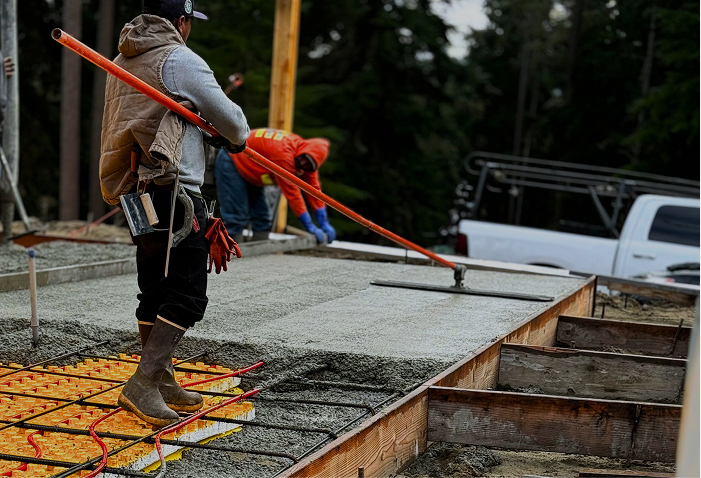
Concrete Slab
The most efficient method of installation as it will heat the whole slab beneath your home or project.
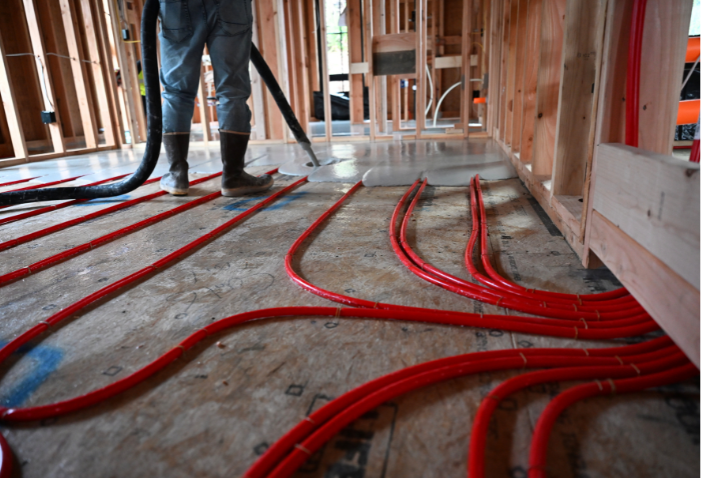
Gypcrete Pour
This method is similar to a concrete pour, but gypsum is lighter and used in a thin layer, making it suitable for multi-story homes with plywood subfloors.
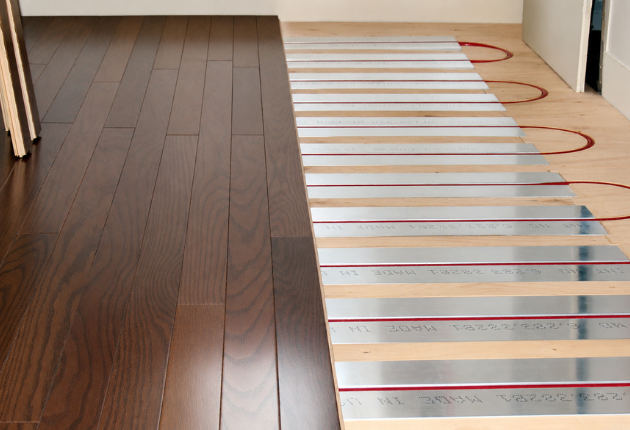
Panel System
If your home is already framed and you are trying to avoid adding too much height, an aluminum panel system is an easy solution.
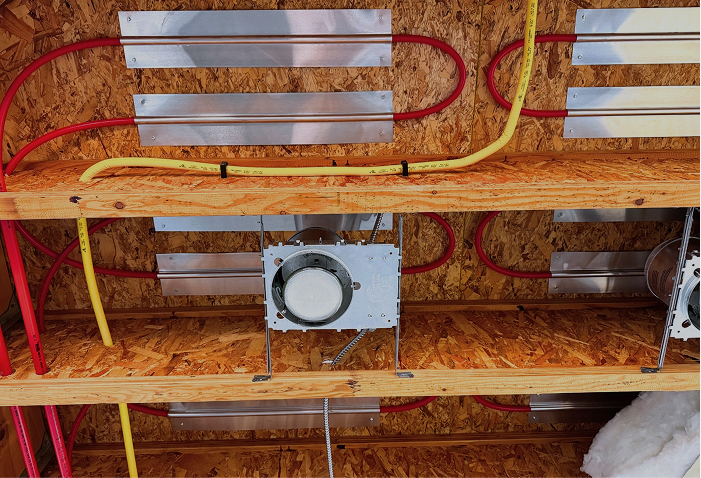
Staple Up
Great for homes with a crawl space or an upper floor. Radiant tubing gets installed under the floor between joists, then backed with insulation.
Radiant Heating Installation Process
Our four-step process is easy for you, helps you stay confident, and sets clear expectations for your project.
Consultation and Project Analysis
We review the plans, talk through your ideas, or walk your property and discuss fuel source and options to determine the best installation method for you.
Custom System Design
Using hydronic CAD software, we generate zoning layouts and tubing schematics. After sizing the boiler and mechanical equipment, we work with you on the mechanical room layout.
Professional Installation
Our Factory Trained Technicians install tubing, manifolds, boilers, pumps, and controls. Working hand-in-hand with your contractor on timing.
Lifetime Comfort
Sit back and enjoy! Hydronic radiant systems are designed for long-term comfort, delivering steady, even heat throughout the home’s life.
Frequently Asked Questions
What is hydronic radiant heating?
A hydronic radiant heating system works by warming water, usually with a heat pump, boiler, or water heater. The heated water is circulated through tubing that is placed under the floors throughout the home. The heat is evenly distributed throughout the home, warming the floor and objects in the room, which not only retains heat longer but also works more efficiently than a forced air system. Eliminating cold spots and creating the highest-quality comfort in a home.
Does radiant heating work?
Yes! Radiant heating is considered the gold standard for home heating for good reason.
Unlike forced-air systems that blow warm air from vents, radiant heating works silently beneath the floor, using the home’s thermal mass to evenly distribute heat from the ground up. This creates a different kind of warmth: forced-air systems heat the air, which rises, causing uncomfortable swings as it cycles on and off, while radiant systems warm objects and surfaces, including you, for a stable, natural temperature.
Radiant systems are more efficient because heat isn’t lost through ductwork or blown around, so it stays where you need it. Many find they can set the thermostat lower, lowering energy bills.
Overall, radiant heating outperforms forced air in comfort, efficiency, and consistency. Once experienced, it’s hard to go back.
Learn more by visiting our how it works page.
Is radiant heat only for new construction?
No, radiant heat isn’t limited to new construction. There are installation methods that make retrofitting a system into an existing structure possible, and you can still benefit from the energy efficiency. We would encourage you to schedule a consultation; one of our design specialists is available to answer any questions you have.
What kind of flooring works with radiant heating?
Radiant heating works best with most floor coverings, ideally low R-value flooring types such as concrete, wood, tile, and laminate. Carpeting is possible, but we suggest you discuss this with one of our radiant heating design experts, who can work with you on the specifications you will need to consider.
Can my radiant system also heat water for my sinks and showers?
Yes! We should start by saying that our radiant heating systems are on a closed-loop, meaning the water in your floor will stay there and be recycled. That being said, there are various options for heating domestic hot water, from combi boilers to add-on tanks. Contact a Janes representative to learn what would work best for your project.
How is the water heated in a radiant system?
The water used for radiant heating is heated by either a boiler, hot water tank or a heat pump. The different systems offer great flexibility in fuel choices for heating the water used in the system, including electricity, oil, propane, or natural gas. Visit our systems page to learn more, or contact a Janes representative to talk through the options.
Have more installation questions?
Our designers have customized thousands of hydronic systems for homes around Western Washington. Schedule a free consultation to get all your questions answered today!
"*" indicates required fields