Radiant heating can be built into a new home or added to an existing structure. We offer many installation methods to fit your project.
Janes radiant heating
For New Construction and Remodels
Ways to Install Radiant Heating
No matter how your project is built, we have a solution that fits.
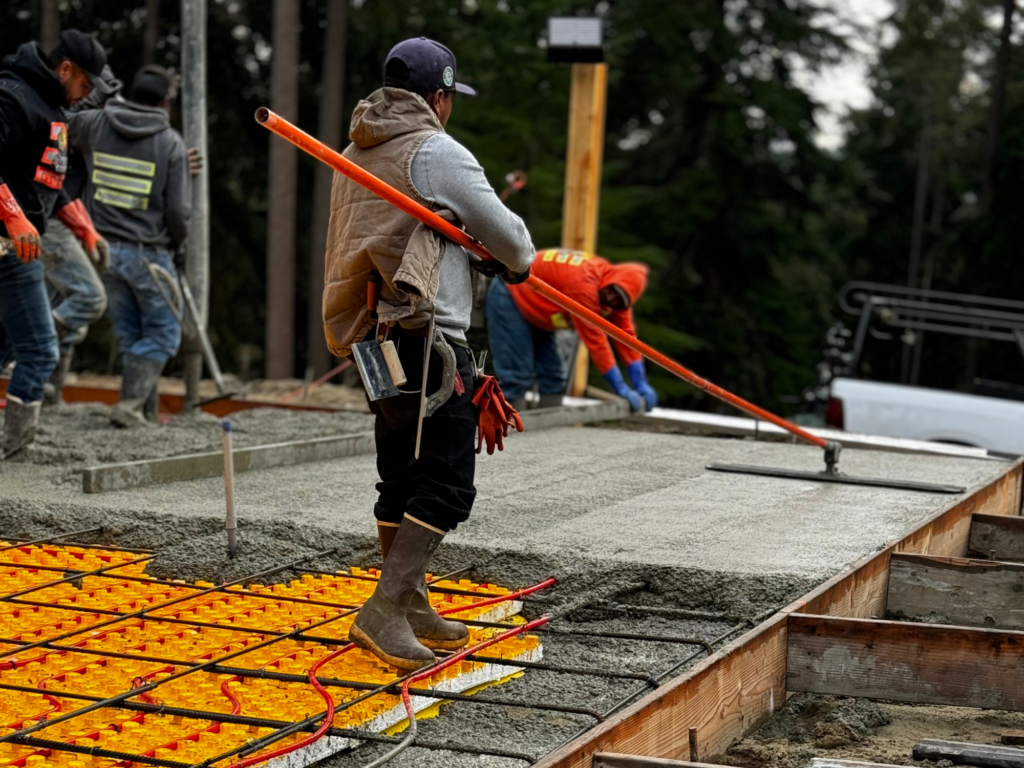
Concrete Slab on Grade
For a concrete slab, tubing is installed over rigid insulation before the concrete is poured. Tubing is tied to rebar or wire mesh or, in some cases, stapled directly to the rigid insulation. Concrete is poured over the top. This method is the most efficient, high-thermal-mass installation available.
This particular pour showcases polystyrene insulation "bubble" board, an insulated radiant foam panel that eliminates the need for wire mesh and staples, thereby simplifying installation before pouring the concrete slab.
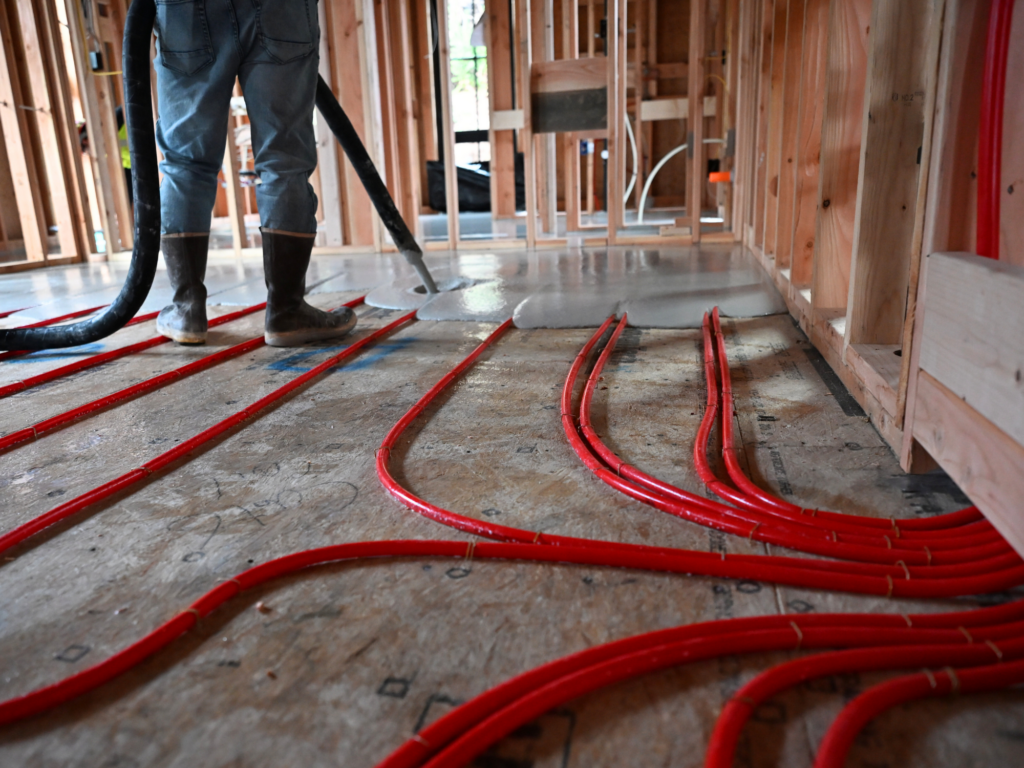
PEX Over Plywood With Gypcrete
Similar to a concrete slab, tubing is stapled down over the plywood subfloor and then covered with a thin pour of lightweight gypsum cement. This method is perfect for multi-level homes and provides an efficient, high-mass installation that distributes heat evenly throughout your home.
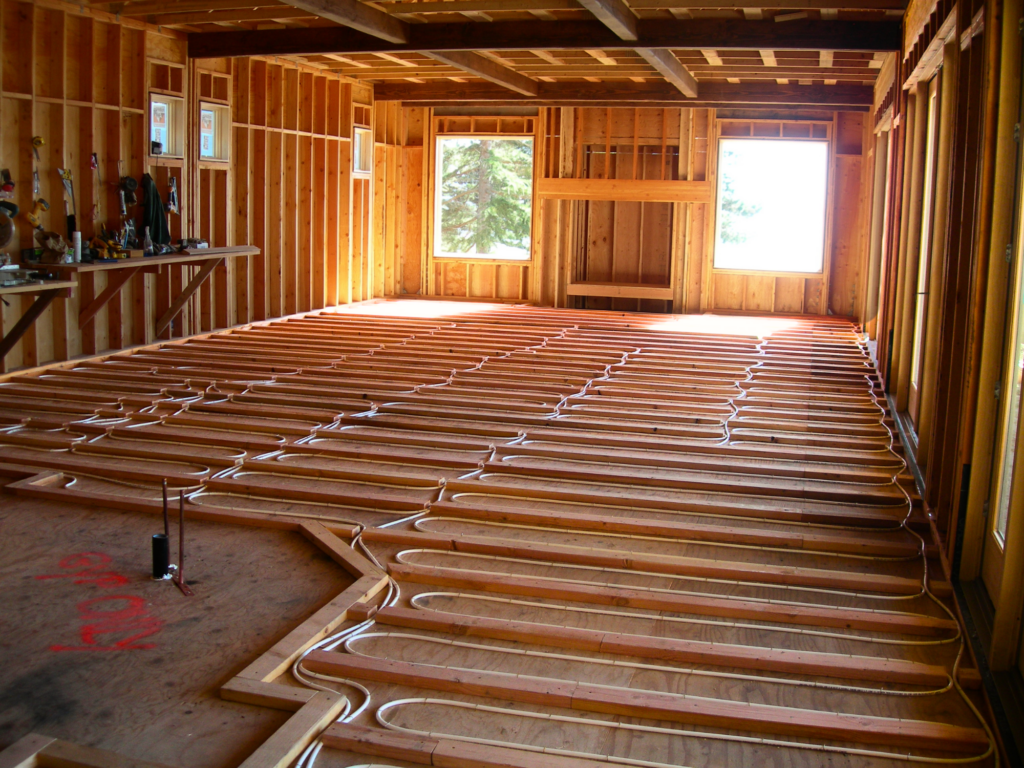
Sleeper Method
Plywood is cut into wooden furring strips, which are placed over the subfloor. Tubing is then installed between the strips, and floor coverings are added directly over the sleepers and tubing. This method is usually used in existing structures or when traditional wood flooring is being installed.
For this particular installation, gypcrete was poured between the strips, which allowed for increased thermal mass and easy installation of wood flooring on top.
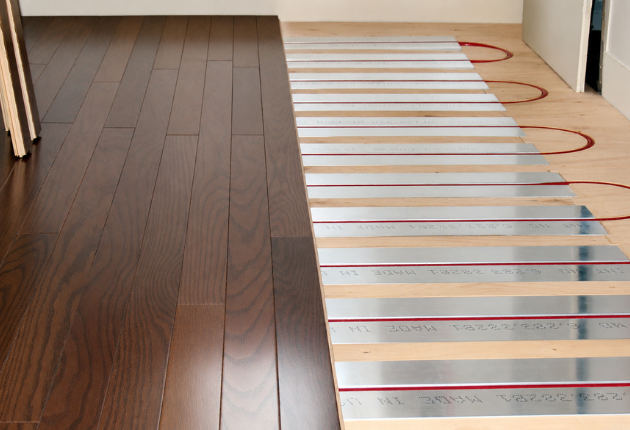
Prefabricated Aluminum Panel System
RAUPANEL systems are pre-engineered for installation over existing subfloors or concrete slabs. Integrated aluminum transfer plates with tubing channels provide even, efficient heat, and finish flooring installs directly over the panels for a simple process.
For projects needing a structural subfloor panel, Warmboard is also an option. Consult your Janes Radiant designer to choose the best solution.
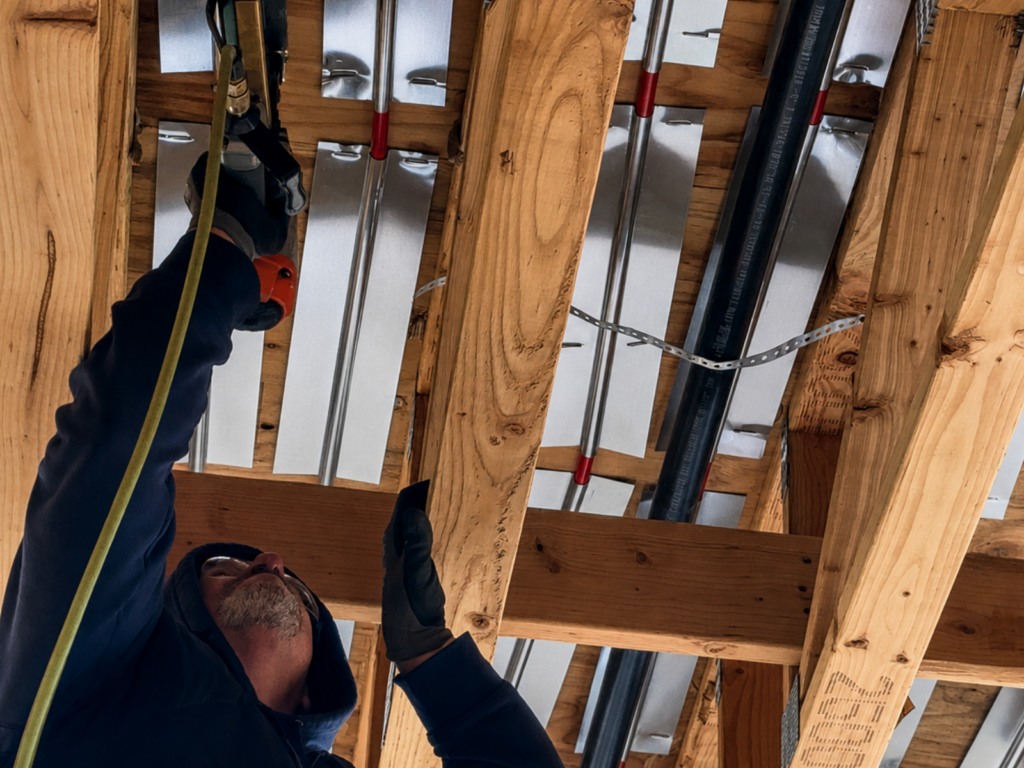
Staple Up
Tubing is stapled to the bottom of the subfloor between the joists, using aluminum heat-transfer plates. The plates improve installation efficiency and response to evenly distribute underfloor heat. Insulation is then installed below the tubing between the joists to force heat upward.