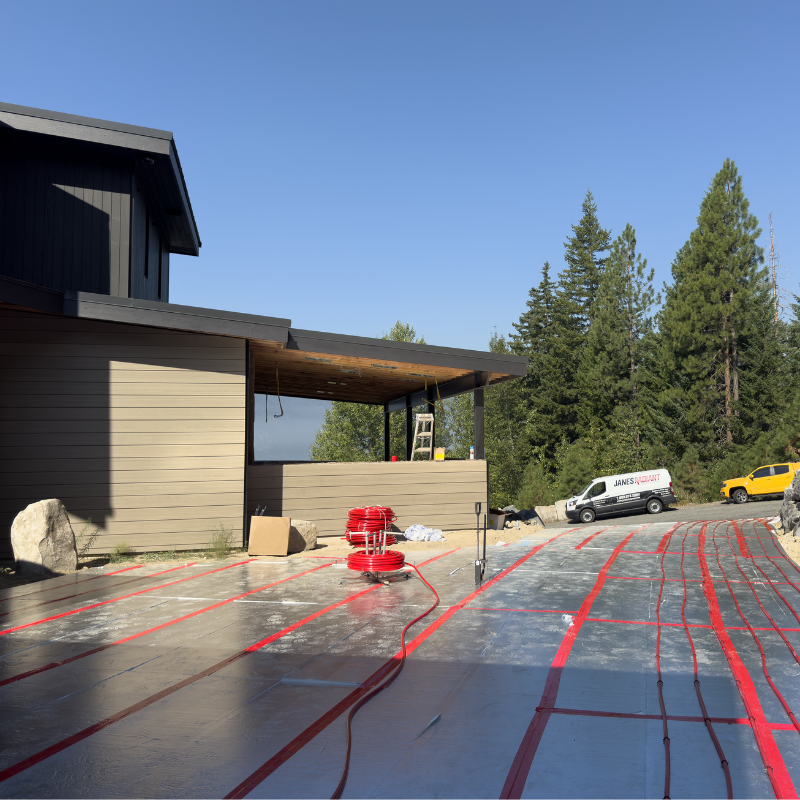
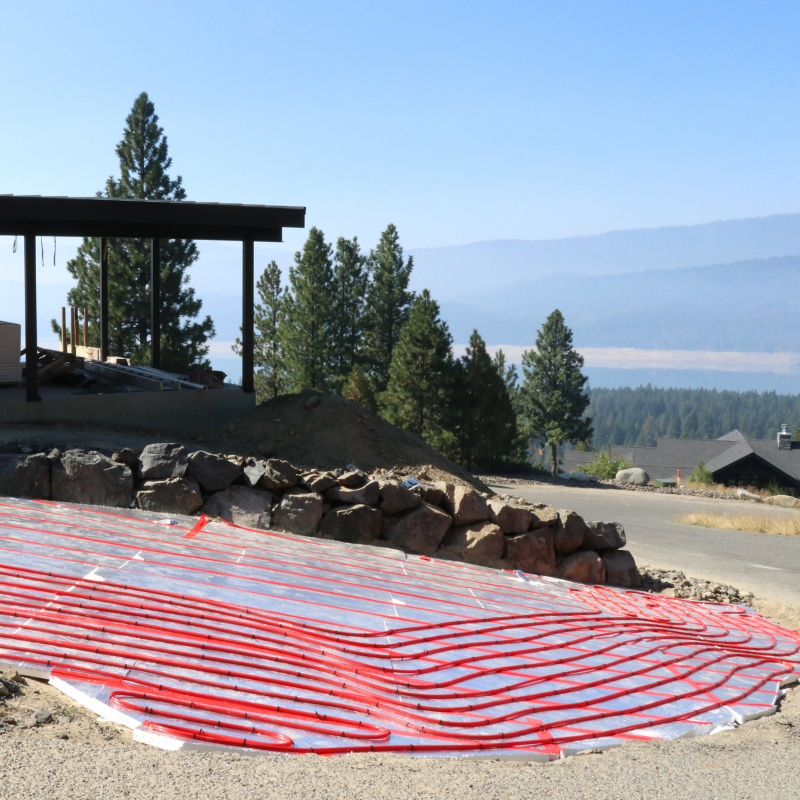
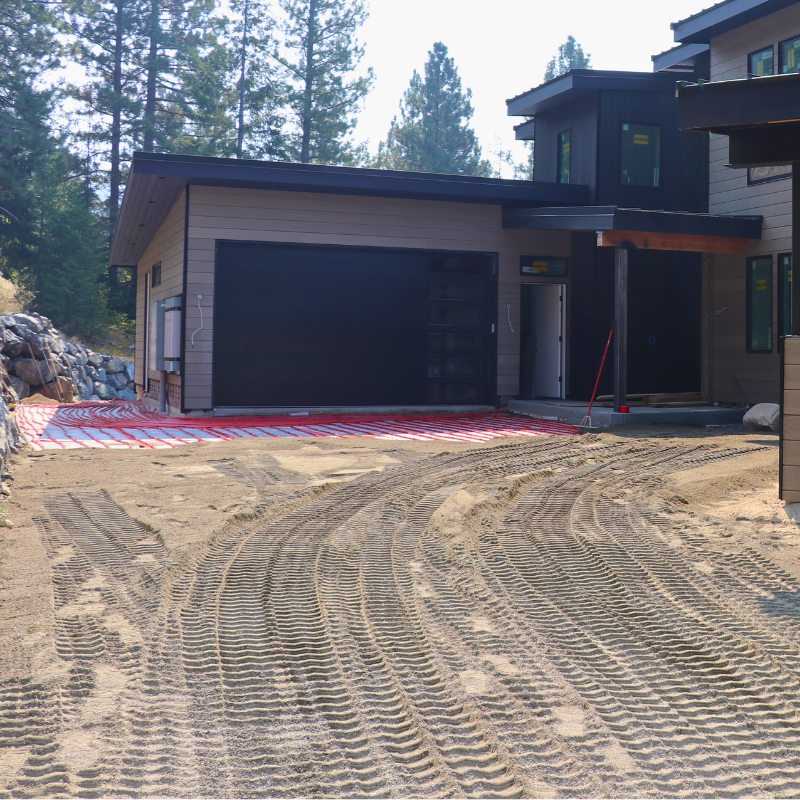
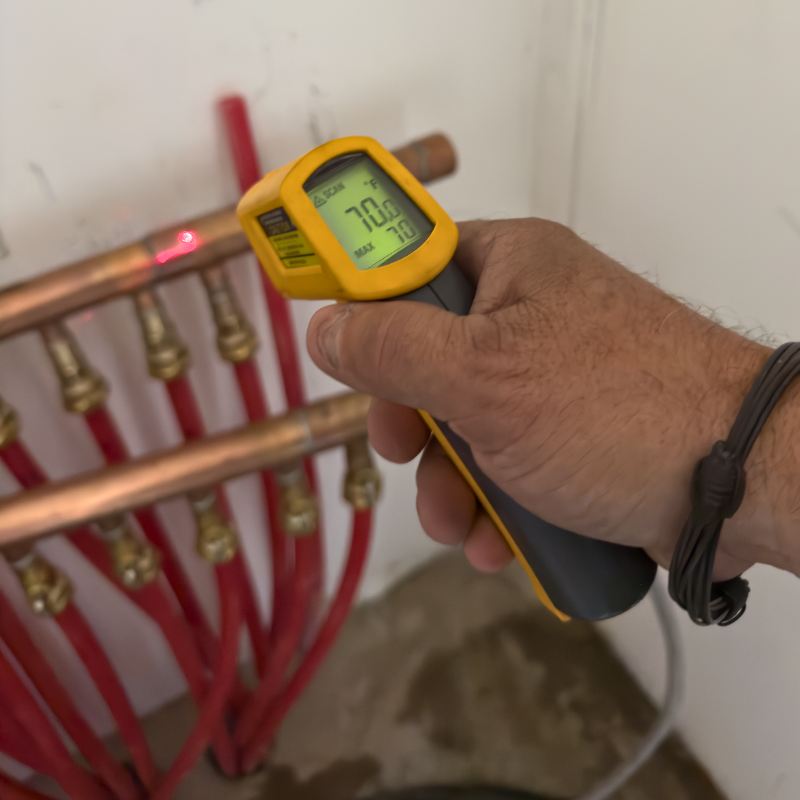
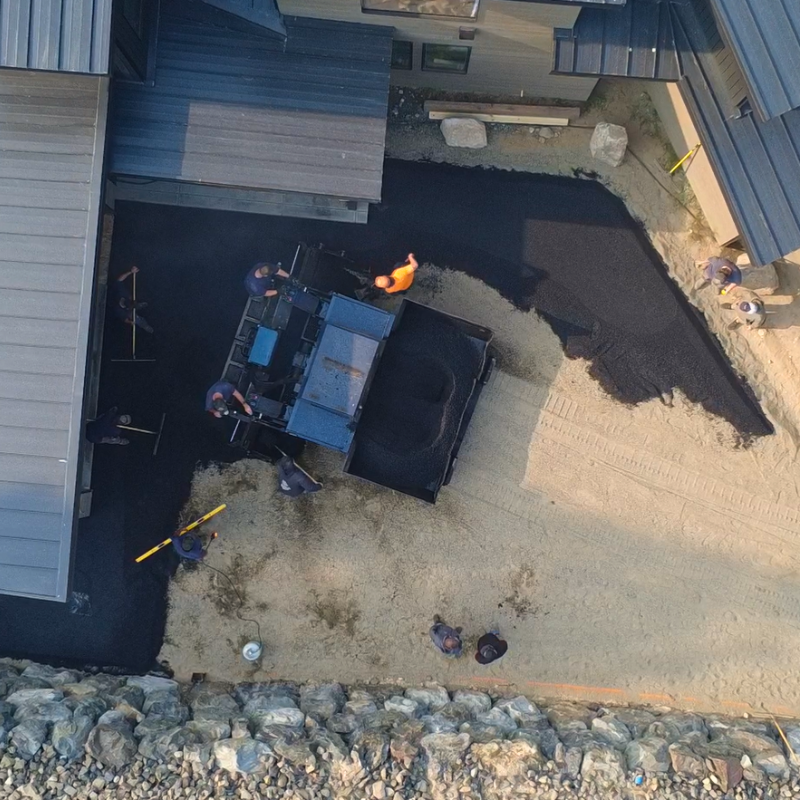
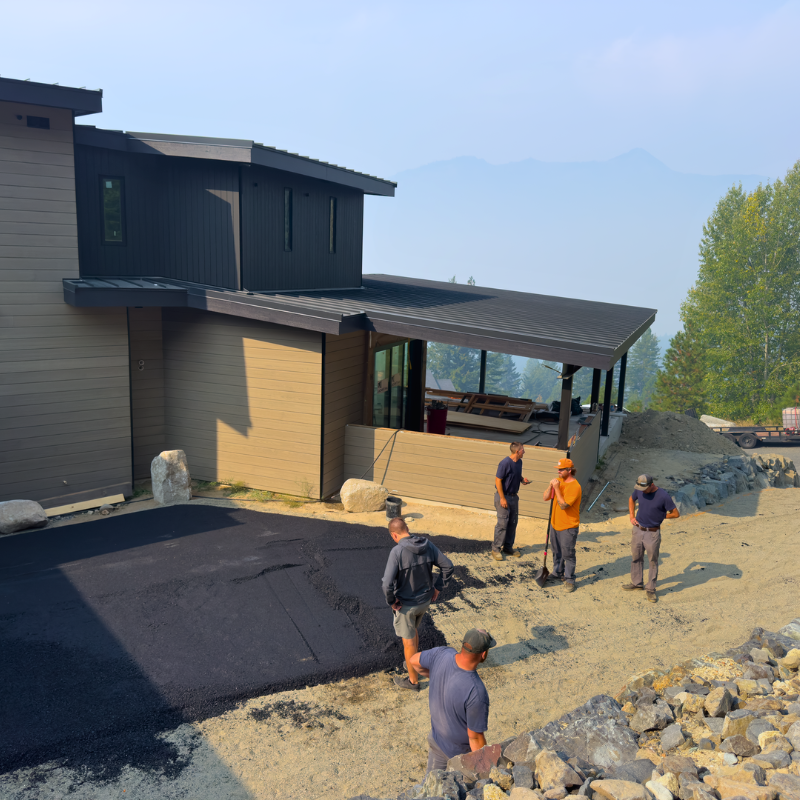
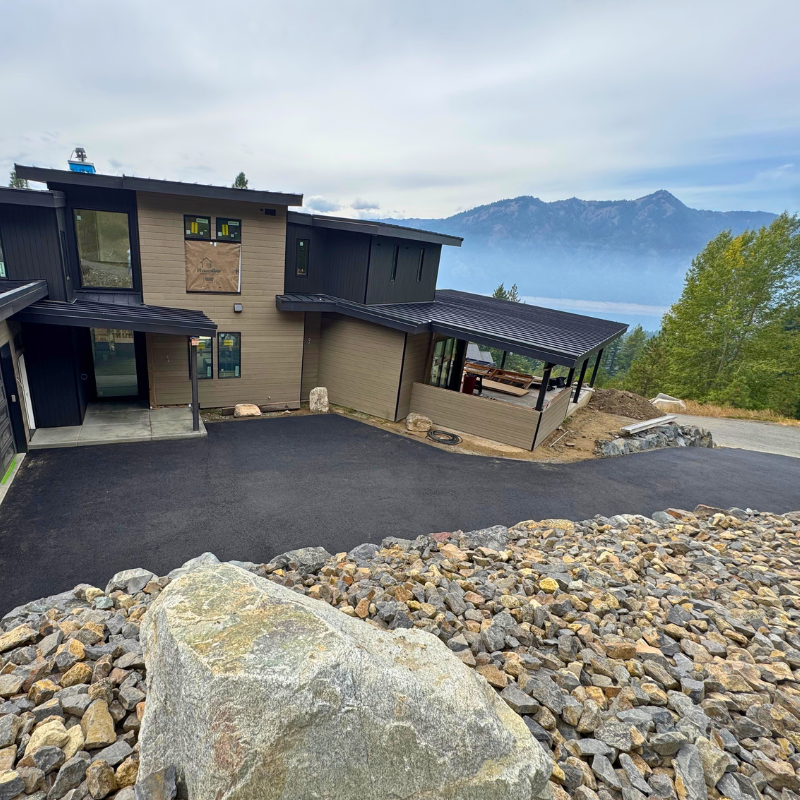
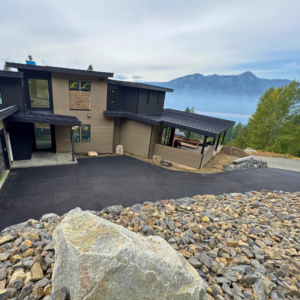
 This custom home sits at roughly 2,700 feet overlooking Lake Cle Elum – high enough that winter snowfall would bury the driveway and made day-to-day life a headache. We designed a custom hydronic snowmelt driveway system engineered specifically for the home’s elevation, paired with the homeowner’s choice of an asphalt driveway.
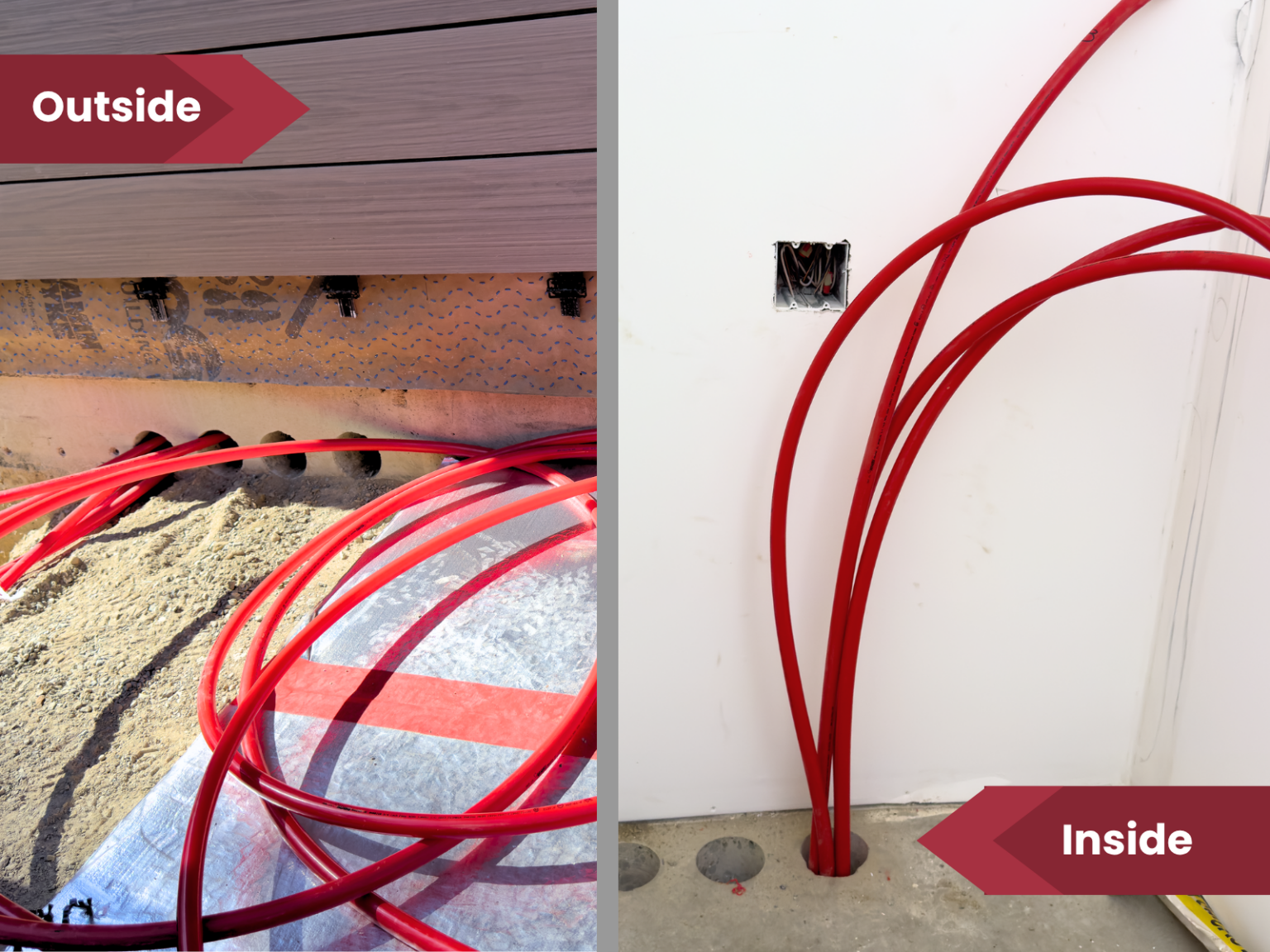
We worked with the contractor to design the mechanical room layout in the back of the garage, along with detailed instructions for feeder holes: the pathways that let the PEX tubing and snow sensor run from the driveway to the manifold and boiler inside.
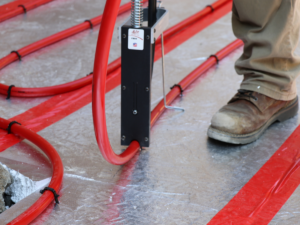
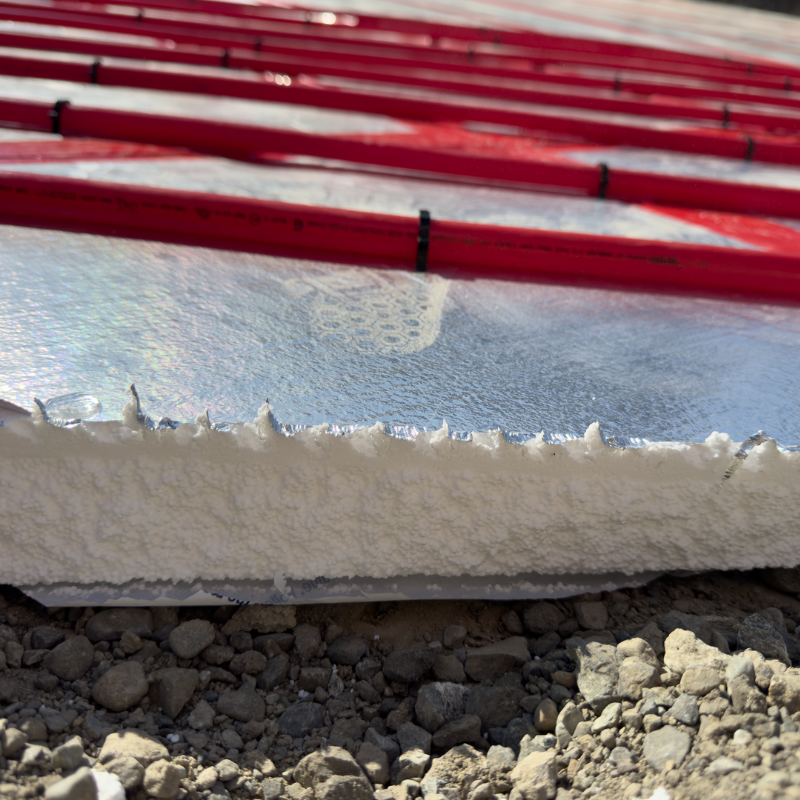
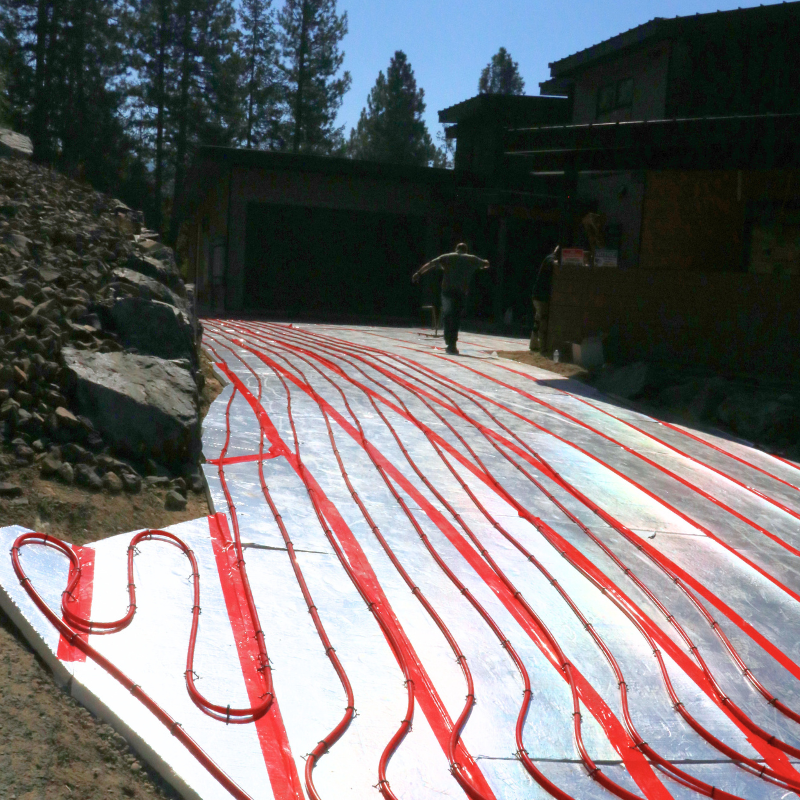
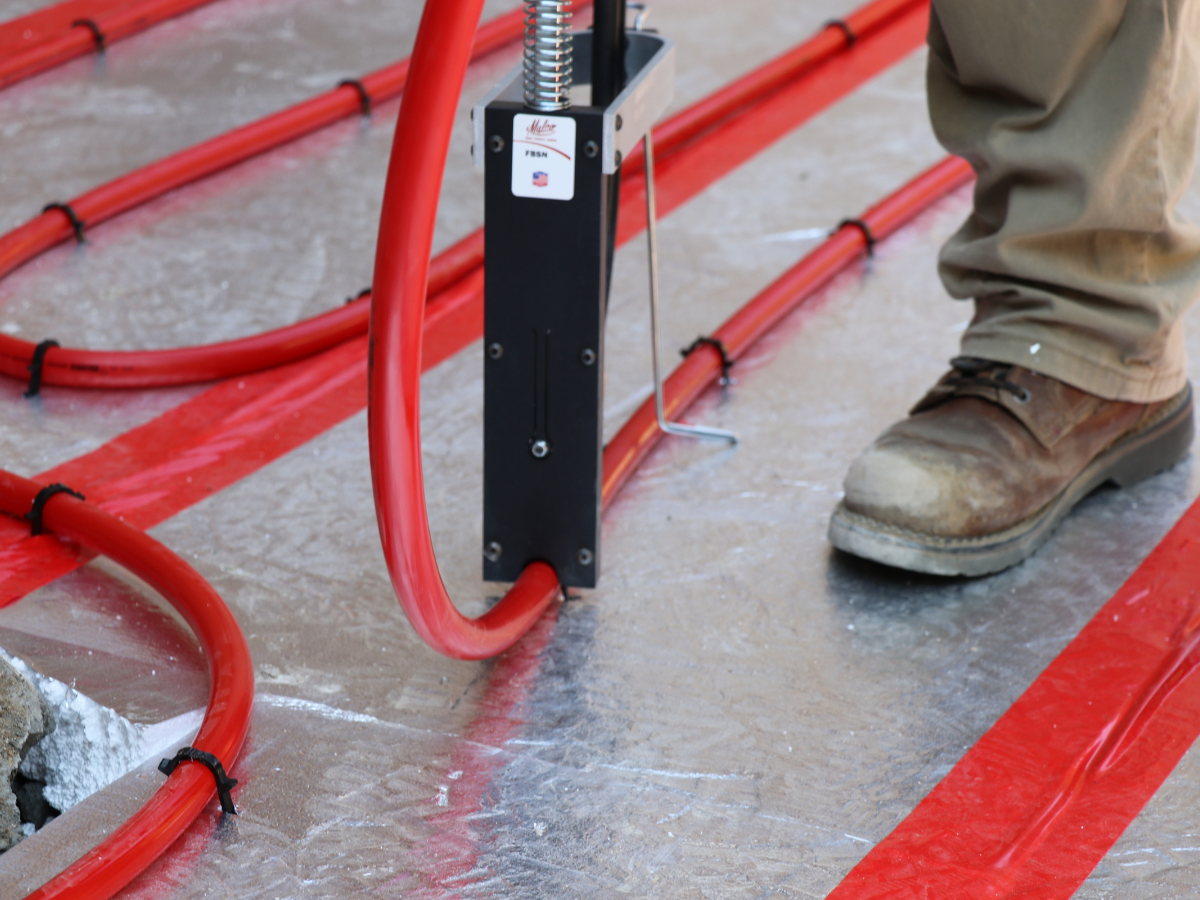
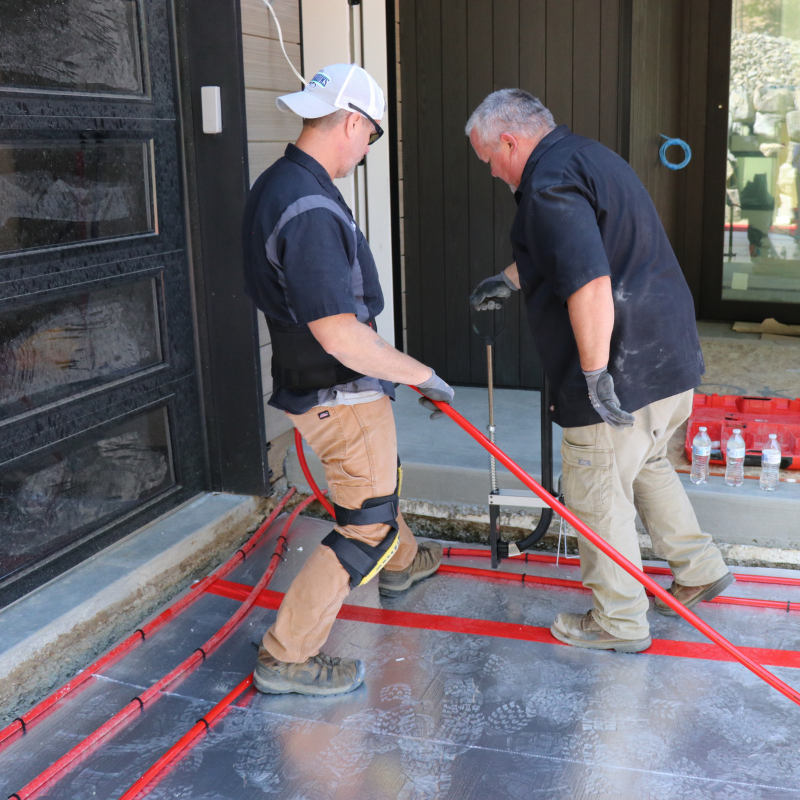
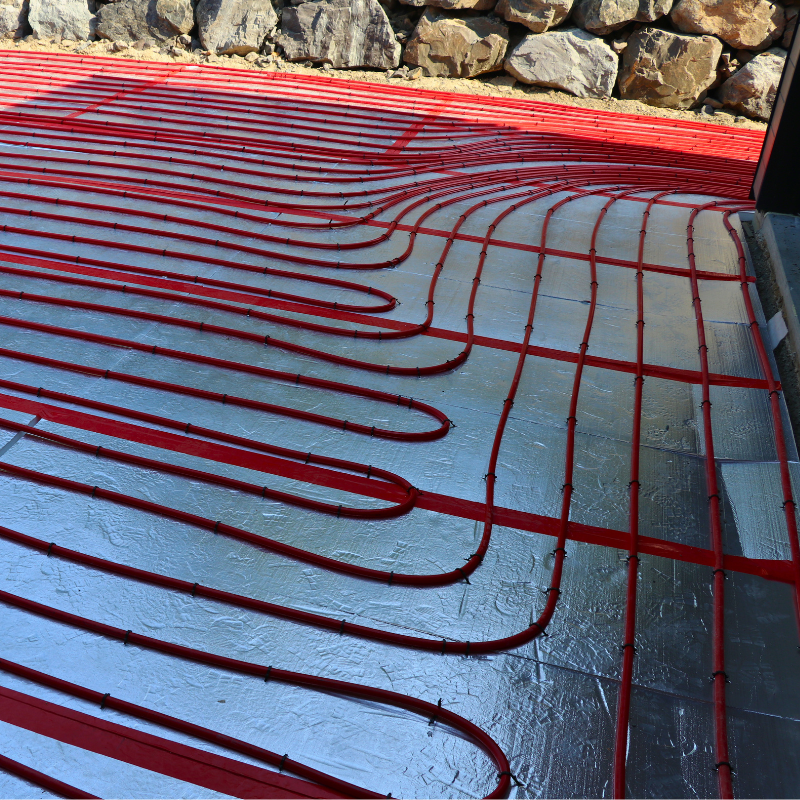
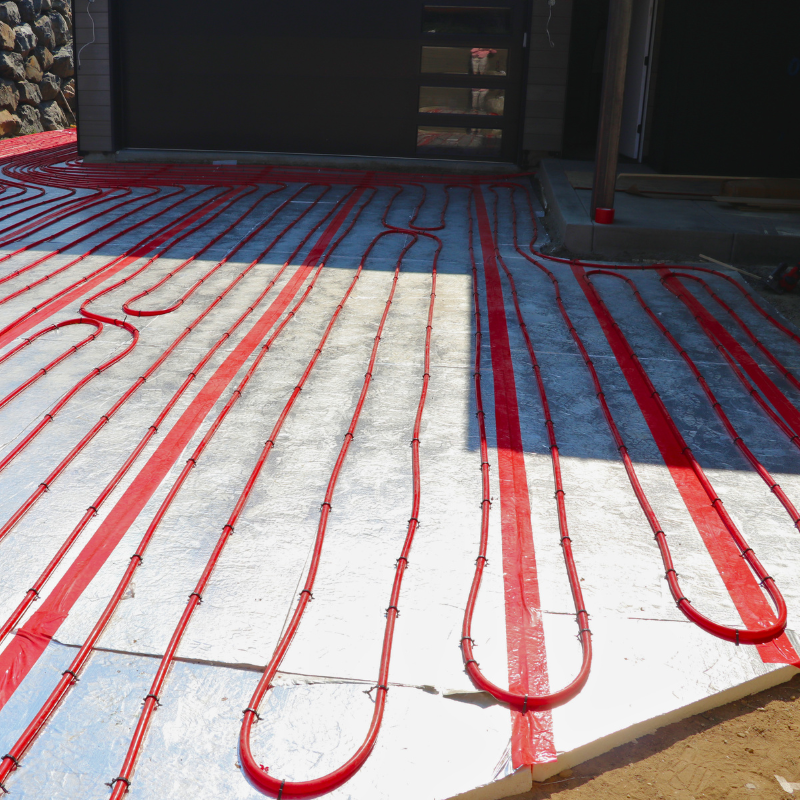
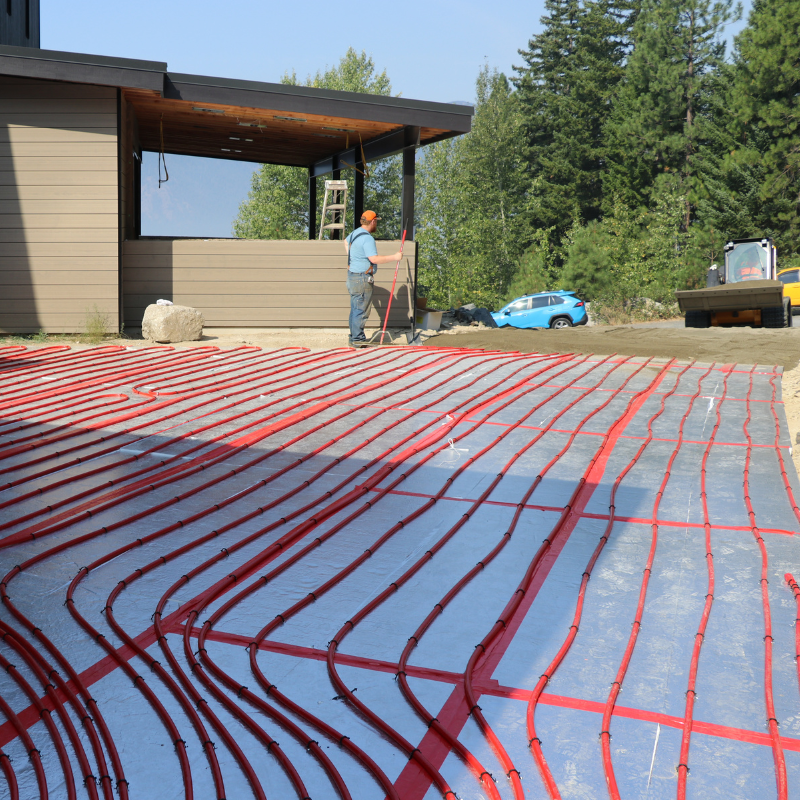
Once the site was ready for tubing, the first step of the heated driveway was laying foil-faced insulation, which helps radiate heat upward and keeps it from dissipating into the ground below. PEX tubing was then installed and secured with foam staples, run in loops the full length of the driveway to distribute heat evenly from top to bottom as quickly as possible.
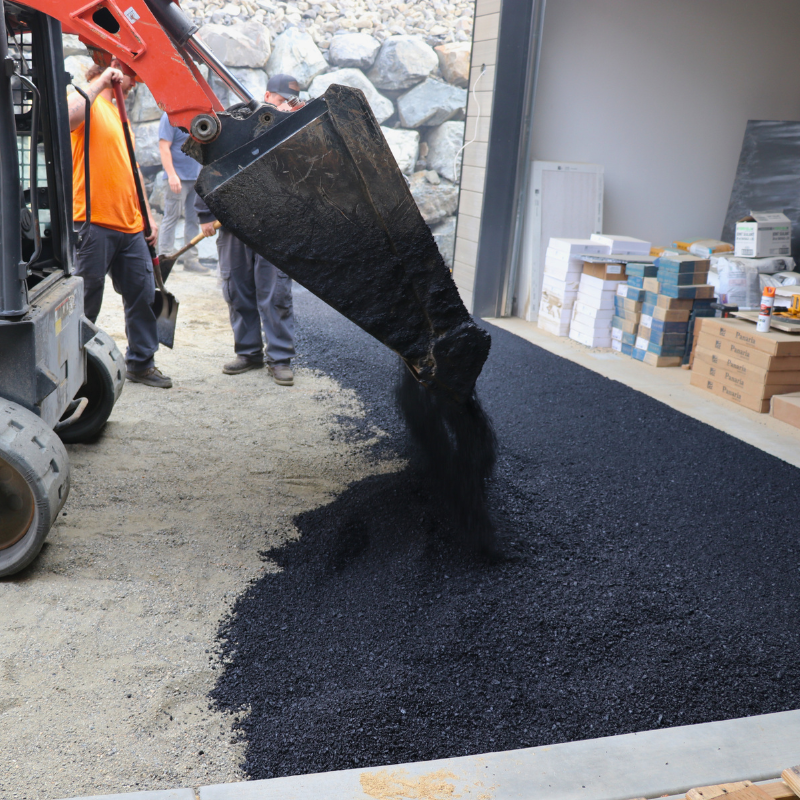
 Most hydronic snowmelt systems are installed under concrete, since the high heat of an asphalt pour can be risky for tubing that isn’t protected correctly. To make this asphalt snowmelt system work, we laid a 4-inch protective layer of sand over the tubing. That sand layer does two jobs: it creates thermal mass to hold heat between the tubing and the asphalt surface, and it protects the tubing itself during the pour.
During the pour, we closely monitored tubing temperature and kept the project manager informed throughout, to make sure the system stayed protected as the asphalt cured.
The finished driveway includes a snow sensor mounted above the garage, facing the sky, so the snowmelt system activates automatically the moment it detects snowfall; no manual switches, no remembering to turn it on before a storm.
See more of this project on YouTube!